
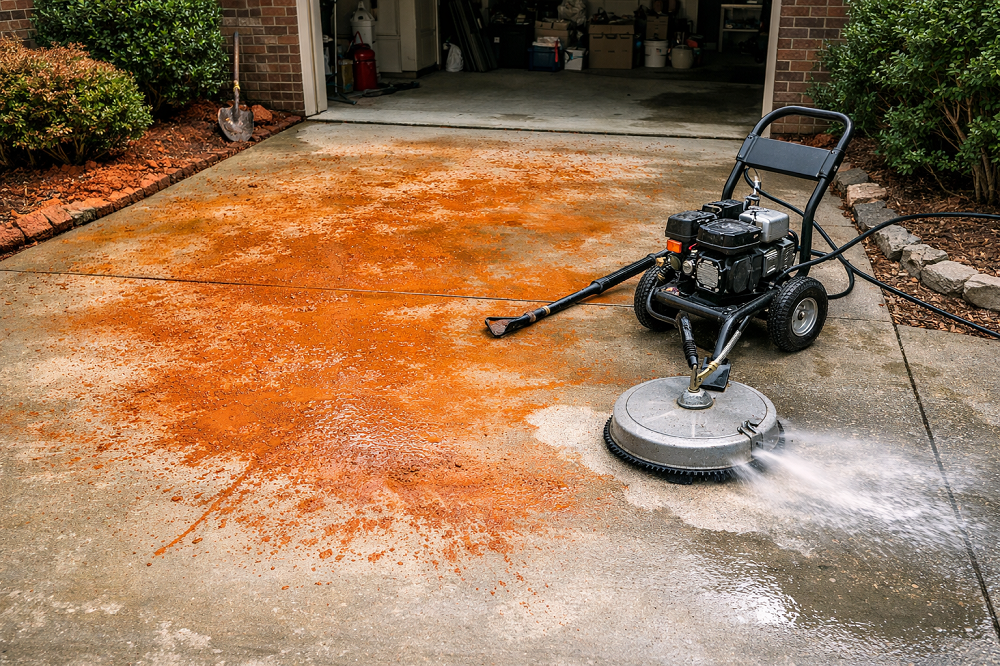
Driveway stains are a common frustration for homeowners in Charlotte, NC, especially when the culprit is red clay. Known for its bold color and tenacious grip, red clay can leave unsightly, stubborn marks on concrete surfaces. In regions like Charlotte and nearby Matthews, NC, red clay is abundant, which means many residents find themselves constantly battling its staining effects. Understanding why red clay causes such persistent discoloration and how to safely remove it is essential for maintaining the appearance and longevity of your concrete driveway.
Understanding Red Clay and Why It Stains
Red clay is a type of soil rich in iron oxide, which gives it that distinctive rusty hue. While beautiful in its natural setting, it becomes a problem once it makes its way onto hardscapes like concrete. The clay particles are incredibly fine, allowing them to seep into the porous surface of concrete where they adhere strongly. Rainwater only exacerbates the problem, spreading the clay and helping it penetrate even deeper into the material.
Unlike surface dirt or mud, red clay doesn’t simply wash away with time or rainfall. Its iron oxide content bonds with the minerals in concrete, creating a chemical fusion that goes beyond surface-level staining. As a result, regular hosing or sweeping proves ineffective in removing the marks. This is particularly challenging in places like Charlotte and Matthews, NC, where the natural soil composition is dominated by red clay and frequent weather patterns contribute to its spread.
Why Charlotte, NC Is Prone to Red Clay Staining
The climate and geography of Charlotte, NC, make it especially vulnerable to red clay stain issues. North Carolina’s Piedmont region, where Charlotte is located, has a distinctive red soil due to its high iron content and clay-rich composition. This soil, when wet, easily clings to shoes, car tires, landscaping tools, and pets, all of which then track it onto concrete driveways and walkways.
Furthermore, Charlotte’s moderate rainfall ensures that red clay regularly finds its way onto outdoor surfaces. Water serves as a carrier, transporting the clay into the microscopic pores of concrete and causing long-term discoloration. In Matthews, NC, a suburb of Charlotte, this issue is just as prevalent, and homeowners often struggle to keep their driveways and patios looking clean despite frequent maintenance efforts.
In addition, new construction in growing communities around Charlotte often disturbs the native red clay, bringing it to the surface and creating more opportunities for stains to appear on nearby properties. If your home is situated near an undeveloped lot or a construction site, red clay stains can quickly become an ongoing battle.
Effective Techniques for Red Clay Stain Removal
Standard concrete cleaning methods are often ineffective against red clay. Because these stains are chemically bound to the concrete surface, traditional scrubbing or simple detergents typically won’t achieve satisfactory results. This is where specialized cleaning techniques, like pressure washing, come into play.
Pressure washing uses high-pressure water to forcefully dislodge embedded particles from concrete surfaces. When done correctly, it can significantly reduce the appearance of red clay stains. However, pressure alone may not be enough. Combining pressure washing with a red clay-specific cleaning solution is the most effective approach. These products are designed to break the bond between the iron oxide in the clay and the concrete, allowing the stains to be lifted away more easily.
In some cases, especially with older or deeper stains, a two-step cleaning process is recommended. First, a chemical pre-treatment is applied to loosen the clay particles. Then, the area is pressure washed to flush out the loosened material. This method is particularly effective in Charlotte, NC, where high humidity and porous concrete can make clay stains even more stubborn.
The Debate: Soft Washing vs. Pressure Washing
When it comes to cleaning concrete, particularly when red clay is involved, there is often debate between using soft washing or pressure washing. Understanding the difference between the two is key to making the right choice for your property.
Soft washing is a low-pressure cleaning technique that relies heavily on chemical solutions to break down stains and biological growths. It is ideal for more delicate surfaces like siding, stucco, or painted wood. While soft washing is gentle and minimizes the risk of surface damage, it may not provide the force needed to penetrate deep concrete pores and dislodge red clay particles.
Pressure washing, on the other hand, is the preferred method for tough surfaces like concrete driveways. Its high-pressure water jets can reach into the textured surface of concrete and blast out trapped contaminants, including clay. When paired with an appropriate clay-dissolving detergent, pressure washing becomes the most efficient method for red clay stain removal in Matthews and Charlotte, NC.
That said, excessive or improperly performed pressure washing can damage your concrete, especially if cracks or existing wear are present. This is why hiring professionals familiar with the best practices in North Carolina’s unique climate is crucial. They can adjust pressure levels, apply safe cleaning agents, and avoid unintended damage.
Choosing a Professional Cleaning Service in Charlotte, NC
Not all cleaning services are equipped to deal with the specific challenges of red clay stains. When selecting a provider in Charlotte or Matthews, NC, it’s important to choose a company that specializes in red clay stain removal and has experience working with concrete surfaces in the region.
A reputable pressure washing service will use eco-friendly products that are safe for your family, pets, and landscaping. They should also offer a detailed explanation of their process, including what cleaning agents are used, how pressure is adjusted based on surface condition, and how they prevent runoff from affecting nearby areas.
Another factor to consider is the inclusion of post-treatment services. Some professional cleaners offer a sealing option after cleaning, which helps prevent future clay penetration by making the concrete less porous. This can be especially beneficial in high-traffic areas or in homes near clay-heavy landscapes.
In North Carolina, where red clay is part of everyday life, investing in regular professional pressure washing can help keep your property looking sharp and minimize long-term damage from persistent staining.
Conclusion
Red clay stains are more than a cosmetic nuisance in Charlotte and Matthews, NC. They are a direct result of the region’s unique soil composition and weather patterns. Because of red clay’s fine texture and iron content, it bonds tightly to concrete, making removal a challenge for homeowners.
While basic cleaning methods rarely succeed, pressure washing combined with clay-targeted cleaners offers an effective solution. Knowing the difference between soft washing and pressure washing also ensures that the right approach is used for your specific surface. Hiring local professionals who understand the needs of North Carolina homes can save time, protect your concrete, and restore your driveway’s appearance.
For homeowners in Charlotte, NC, red clay stains do not have to be a permanent fixture. With the right techniques and a bit of expert help, your concrete surfaces can look fresh, clean, and free of that stubborn red tint.
Need Expert Pressure Washing Near You?
At New Life Pressure Washing Plus, we bring nearly 30 years of experience and a strong commitment to quality service on every job we do. From safe, low-pressure washing and hot-water pressure washing to gutter and window cleaning, we take care of houses, driveways, patios, pool decks, and more with attention to detail and care. We stay in constant communication with our customers from start to finish to ensure everything is done right. Contact us today to schedule your pressure washing service or to ask any questions about our offerings, we look forward to working with you and helping your home look its best.